
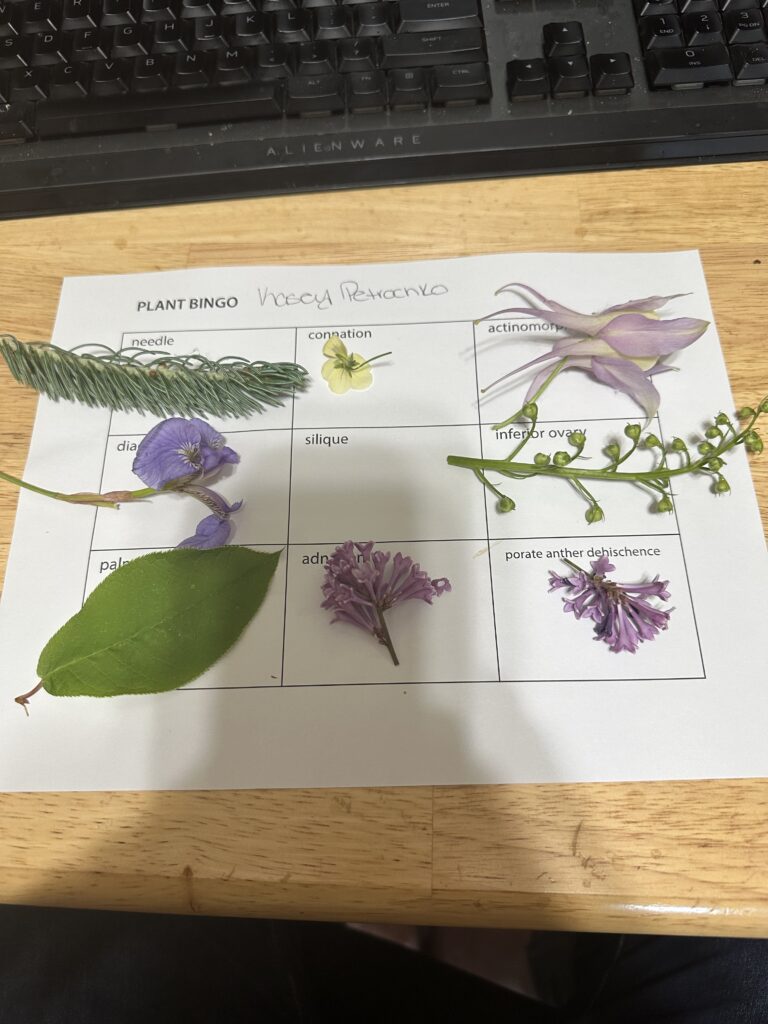
I was, unfortunately, unable to find any qualifying plants for the “silique” category. I retrieved these plants from my front yard.
I was, unfortunately, unable to find any qualifying plants for the “silique” category. I retrieved these plants from my front yard.
Thanks Kasey,
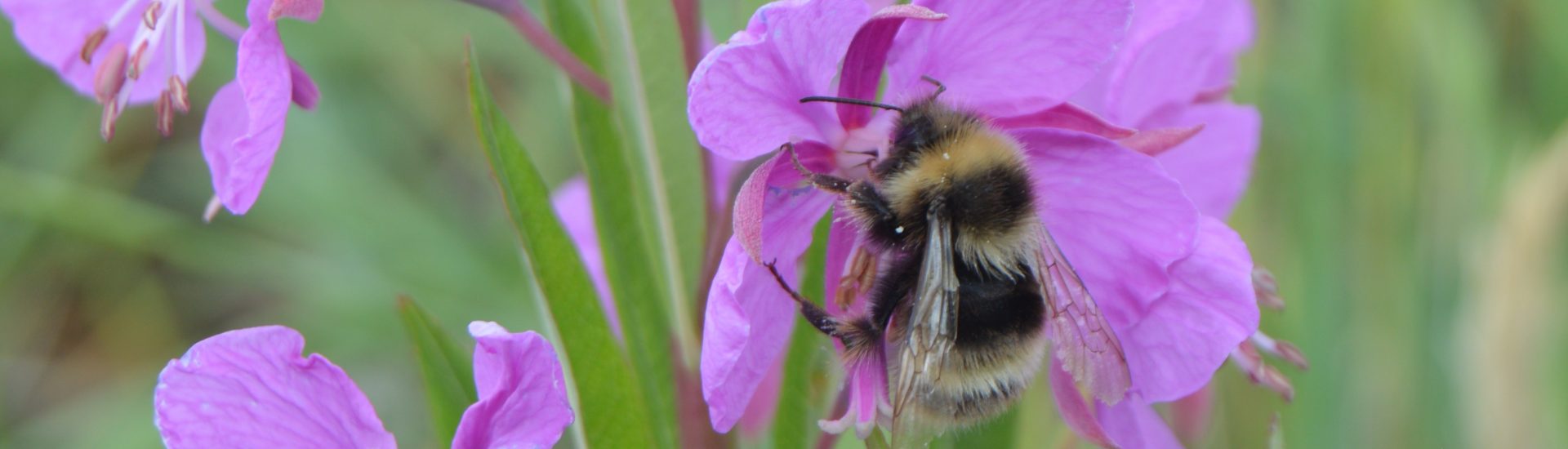
it would be good if you could review some of these terms, 1) palmate vs. pinnate venation, the chokecherry leaf has pinnate venation with a central midvein and veins coming off at various points along the midvein), 2) diadelphous stamen arrangement shows stamens that are fused in two bundles, and specifically of the 10 stamens in the legume family 9 are fused and 1 stamen is distinct, the Iris does not have diadelphous stamens, 3) Porate anther dehiscence can be found in a number of families, but mostly in the blueberry or heath family in Alaska (blueberries and relatives), but if you check on the stamens of your tomatoes you might also see those porate anthers. Little pores at the top of the stamens and that is how the bumble bee shakes out the pollen once it is inside the flower and sonicates the pollen out of the anther. The anthers of lilac dehisce and release the pollen via longitudinal slits. It is an interesting flower, it only has two stamens, the red arrow points to the slits on the anthers.